


How to Prepare an Investor-Ready Data Room in the UAE
Publication date: 15.09.2026
Assembling a data room that holds up to investor scrutiny is one of the make-or-break tasks for founders and scaling companies across the Emirates chasing capital. When the paperwork is scattered and no clear review checklist exists, deals slow down and chances slip away. This walkthrough shows precisely what backers expect and how to lay out your repository so it works in your favor. Learn more about our fundraising services here.
What Is an Investor-Ready Data Room and Why It Matters

A data room is a protected online repository holding every file a backer needs to run their checks. Picture it as the single, authoritative record of your company. Once genuine interest appears, the other side has to confirm your figures, financial condition, and legal footing before releasing any money.
Getting this repository right pays off in several ways:
- Cuts the length of the review cycle dramatically.
- Signals professionalism and openness, which earns confidence.
- Heads off the drift in interest that sets in when paperwork drags.
- Surfaces your own weak spots so you can patch them before anyone else spots them.
Key Documents for Your Investor Data Room Checklist
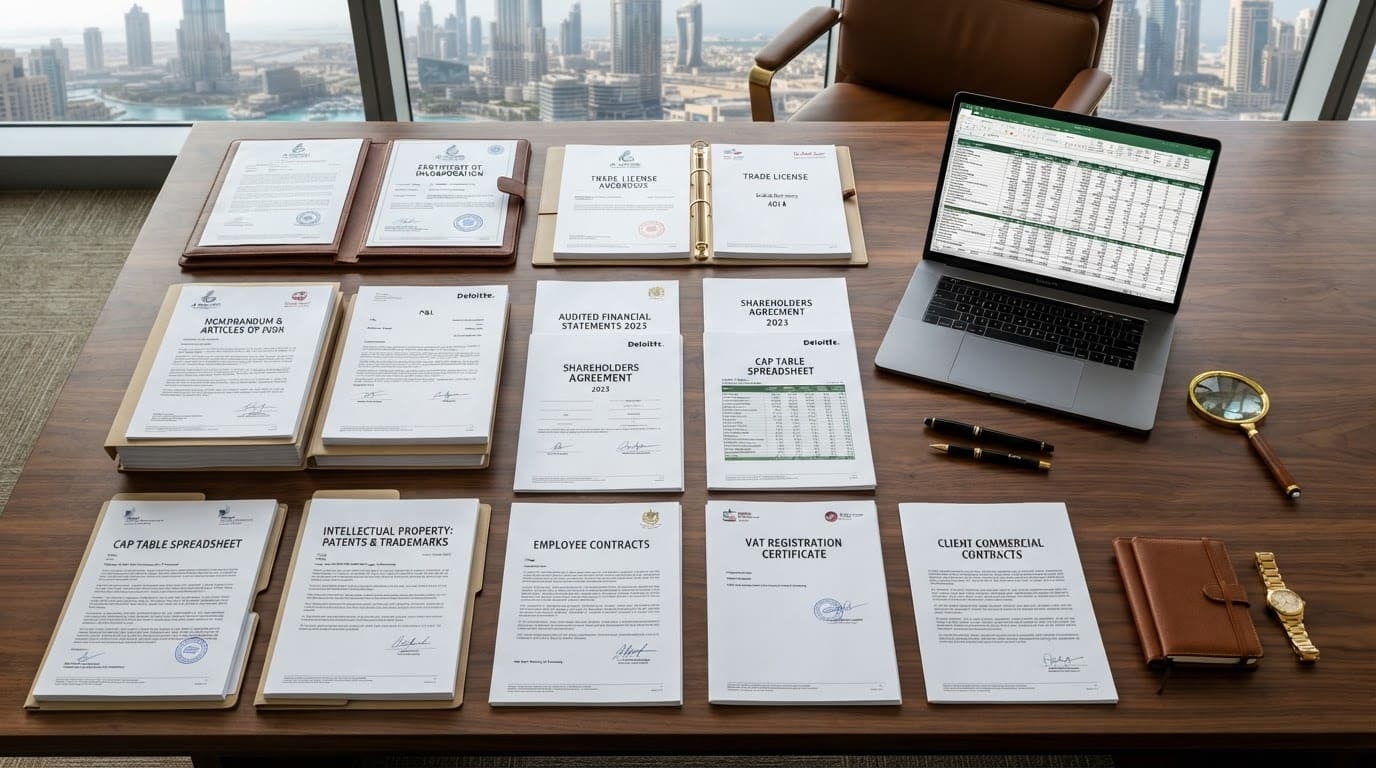
Clearing an Emirati due diligence review means handing over a full paper trail. Backers hunt for alignment across every file — if your story is one of growth, the underlying figures and executed contracts have to back that up.
Corporate Records and Licences
Locally, your legal base gets examined before anything else. Backers want proof you operate within the rules of your chosen jurisdiction, be it a Free Zone such as ADGM or DIFC or the Mainland. Cover the following:
- Certificate of Incorporation together with the Trade License.
- Memorandum and Articles of Association (MOA/AOA).
- The Register of Directors and Officers.
- Recorded minutes from board and shareholder gatherings.
Capitalization Table and Shareholder Agreements
The Cap Table sits at the core of any local repository, spelling out ownership stakes and their size. Reviewers expect a fully diluted picture that folds in options and warrants. Attach the Shareholder Agreement (SHA) along with any side letters extending particular rights to earlier backers.
Financial Statements and Tax Records
Local financial reviews generally reach back across the past two to three years of trading. Being early-stage is no excuse to skip clarity. Have these ready:
- Audited accounts where they exist, or management figures otherwise.
- Profit and Loss (P&L) statements, Balance Sheets, and Cash Flow reports.
- VAT registration papers and your filing record.
- A breakdown of any borrowings or credit lines still outstanding.
Contracts and Intellectual Property Documents
For many ventures the real worth sits in the intellectual property and the customer roster. You have to establish that the company — not an individual — holds the technology and that income is dependable. Bundle in every significant client and supplier contract, plus trademark filings, patents, and IP assignment deeds signed over by founders and staff.
HR Documents
Backers want assurance the team is properly contracted and aligned with Emirati Labour Law. A readiness review will expect to find:
- Signed employment agreements for everyone in a key role.
- The staff handbook alongside internal policy documents.
- Particulars of any Employee Stock Option Plan (ESOP).
- Consultancy contracts covering freelancers and outside developers.
Market Research and Financial Projections
Track record counts, yet the people writing cheques are betting on what comes next. Lay out a coherent business plan and forecasts spanning the coming three to five years. Fold in your market sizing (TAM, SAM, SOM) and the read on customer acquisition cost (CAC) against lifetime value (LTV).
A disorganized repository reads as a disorganized company. If the paperwork defeats you, a backer may conclude their money would fare no better in your hands.
How to Structure Your Data Room for Investors
How the material is arranged carries as much weight as what it contains. No one should have to dig around for a particular license or agreement. A tidy structure keeps the review moving for both sides.
Folder Naming and Hierarchy
Number your folders to hold the order steady. Open with broad headings, then branch into precise sub-folders. A workable layout:
- 01_Corporate_Legal
- 02_Financial_Information
- 03_Human_Resources
- 04_Intellectual_Property
- 05_Commercial_Contracts
Name each file clearly and stick to one convention. Skip vague labels such as “Document1.pdf” in favor of something like “2023_Trade_License_Renewal.pdf”.
Access Rights and Confidentiality
Protecting sensitive material matters above all when you circulate it. Rely on a proper virtual data room (VDR) platform that lets you dial permissions up or down. You want visibility into who opened each file and how long they lingered. Hold back “Editor” rights entirely; “Viewer” or “Downloader” access does the job in most cases.
Typical Red Flags to Avoid in Your Data Room
A handful of slip-ups can freeze your round or drag the valuation down. Watch for these recurring traps:
- Trade Licenses past their expiry or absent regulatory sign-offs.
- Cap Tables left incomplete because convertible notes or SAFEs went unrecorded.
- Gaps between the management figures and what the bank statements show.
- Intellectual property still sitting under a founder’s name rather than the company’s.
- Unsigned key contracts or employment agreements.
Best Practices for Maintaining Your Virtual Data Room
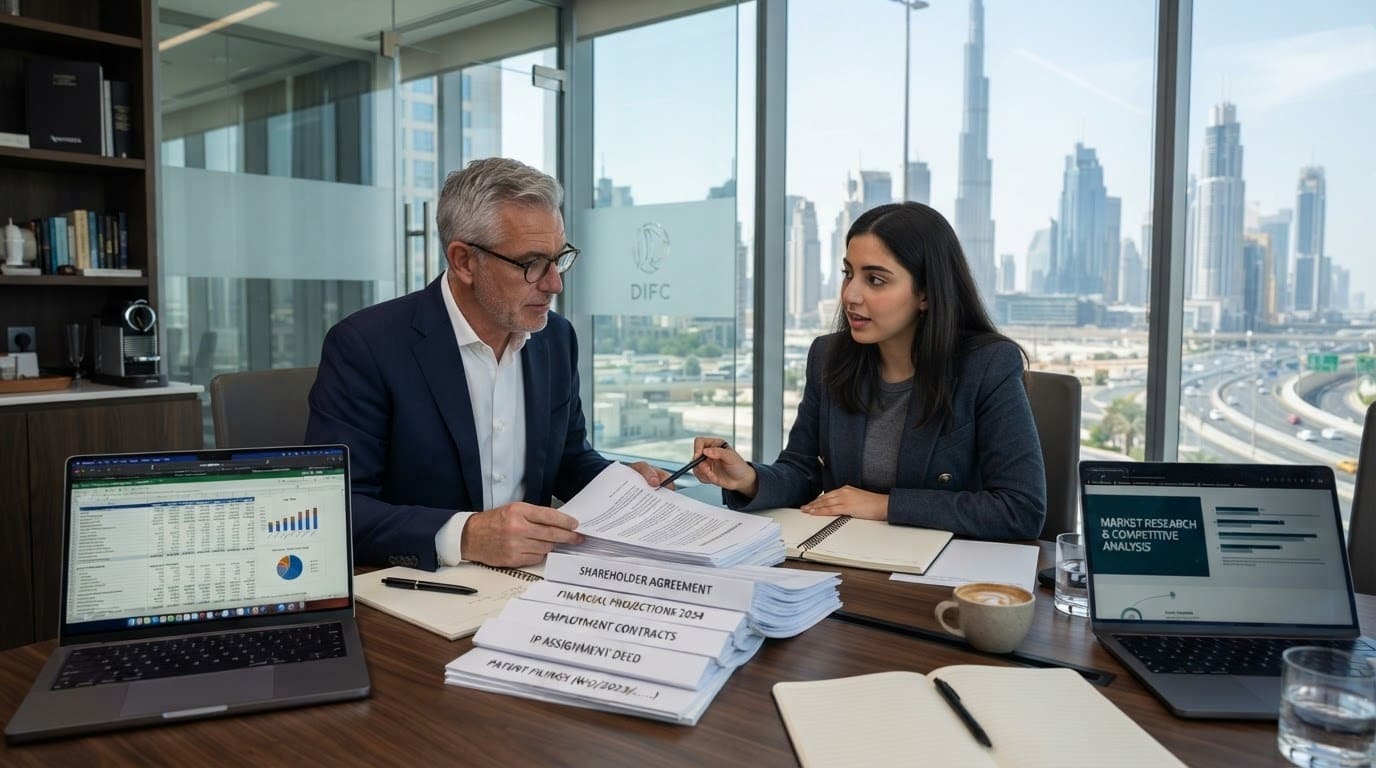
Running a repository is continuous work, never a set-and-forget exercise. Refresh the contents as events happen. The moment a major client signs or a license renews, load it straight away. That way a request for current figures never catches you unprepared.
Review the permission list on a regular basis. The instant a backer walks away from the deal, cut off their access to anything confidential. Doing so keeps your trade secrets and forward plans under wraps.
Expert Tip: Stage a “mock due diligence” — hand the repository to an outside advisor for a dry run before real backers step in. It flushes out the mistakes you would otherwise overlook.
How Aser Capital Can Help You Prepare for Investor Due Diligence
Working through the intricacies of the Emirati investment scene calls for accuracy and local know-how. At Aser Capital, we help founders close the distance between where they stand and genuine investor readiness.
Our support runs end to end, from expert business planning that frames your vision to dependable fundraising services that link you with the right capital partners. We can also run a preliminary investment due diligence to flag warning signs early and help you build a spotless repository.
Don’t let paperwork hold your growth back. Get in touch today for a consultation on sharpening your data room and closing your next round on solid footing.
Frequently Asked Questions
Do all documents need to be translated into English for investors in the UAE?
Yes. The vast majority of backers operating locally — Emirati and international alike, and especially those in ADGM and DIFC — run their review in English. Where originals such as licenses or contracts exist only in Arabic, you will have to commission a certified translation.
At what stage of fundraising should you grant access to the data room?
Complete access typically follows the signing of the Term Sheet. Even so, keep a core bundle ready ahead of time, so you can hand it over the moment a backer signals readiness for the deeper review.
Is it safe to use regular cloud storage like Google Drive for a data room?
It can be done, but seasoned backers lean toward purpose-built virtual data rooms (VDRs). These platforms offer stronger protection, support document watermarking, and record exactly who opened which file and when.
How long does the document review process usually take for an investor in the UAE?
Given a well-ordered repository, expect somewhere between two and four weeks. When files are scattered, signatures are absent, or licenses have lapsed, the process can stretch across months — and that delay frequently cools a backer’s enthusiasm.
What should you do if your intellectual property (IP) has not yet been assigned to the company?
Treat this as a serious warning sign. Ahead of any review, formally move the rights to every piece of development, patent, and trademark off the founders or outside developers and onto the company. Emirati backers apply real rigor to confirming who owns the assets.
Is an audit of financial statements required for early-stage startups?
At the Pre-seed and Seed stages, management figures and bank statements usually pass muster. From Series A upward, though, audited accounts from a locally recognized firm shift from optional to essential for proving financial transparency.
Similar services




Recent Posts